


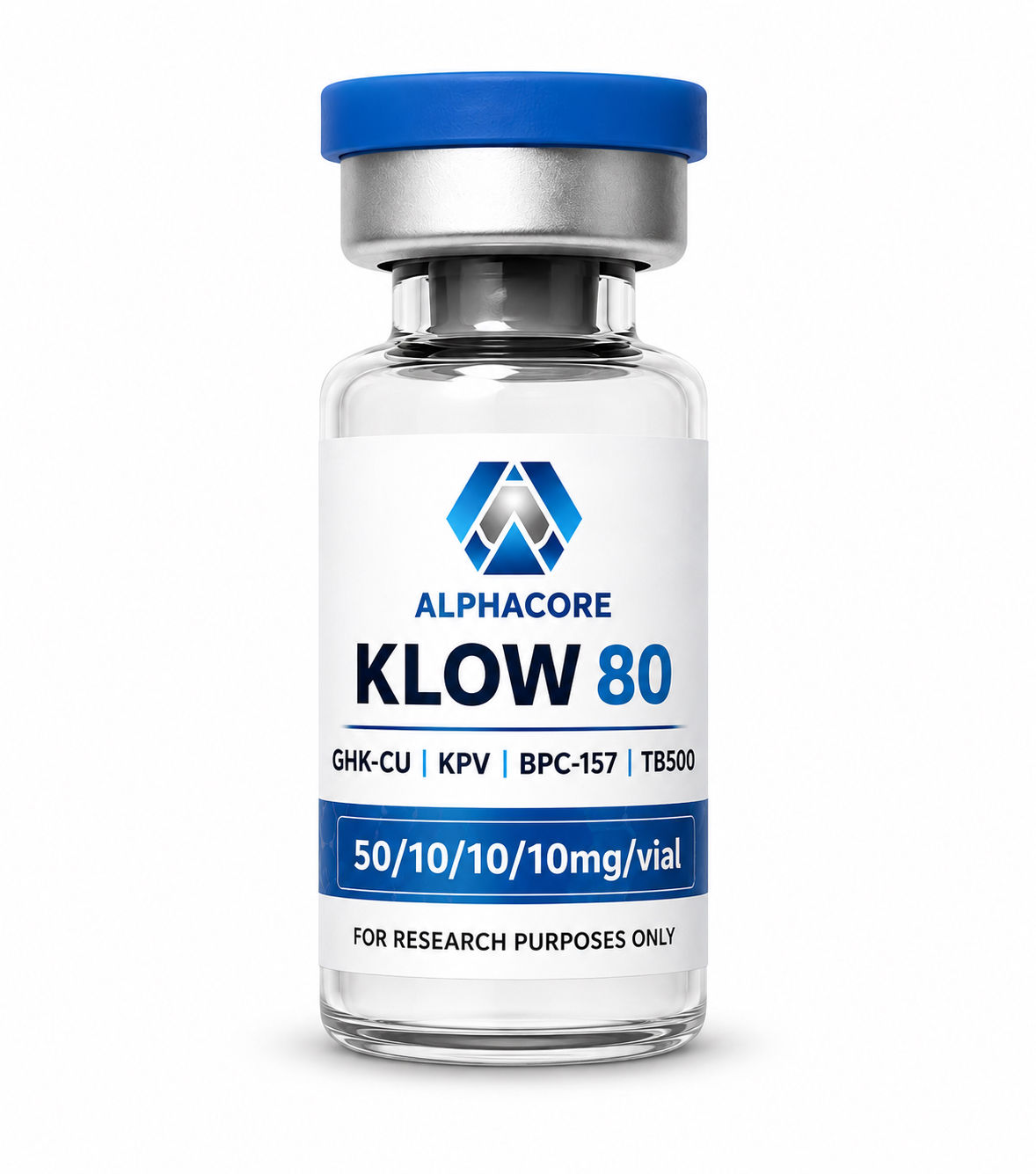

KLOW peptide (sometimes marketed as “Klotho-derived peptide” or “Klotho fragment”) is an experimental peptide inspired by the anti-aging protein Klotho.
Klotho is named after the Greek Fate and is associated with longevity biology. It was discovered through aging research at institutions including University of Texas Southwestern Medical Center.
⸻
What Klotho Does in the Body (Background)
The natural Klotho protein is involved in:
•Regulating aging pathways
•Supporting kidney function
•Controlling phosphate and calcium metabolism
•Reducing oxidative stress
•Modulating insulin and IGF-1 signaling
Higher Klotho levels are associated with:
•Better cognitive function
•Improved vascular health
•Increased lifespan in animal models
⸻
What KLOW Peptide Is Claimed to Do
Because it’s derived from Klotho signaling, KLOW is marketed to potentially:
Support Longevity Pathways
•May influence IGF-1 signaling
•May reduce cellular oxidative stress
•Could modulate mTOR-related aging pathways
This is largely theoretical in humans.
⸻
Support Brain Function
Klotho is linked to:
•Synaptic function
•Memory performance
•Neuroprotection
Some animal studies show Klotho enhancement improves cognition, but KLOW peptide data in humans is minimal.
⸻
Support Kidney & Vascular Health
Natural Klotho:
•Protects against vascular calcification
•Helps regulate phosphate balance
•Supports kidney resilience
Whether injectable KLOW replicates these effects in humans is not well established.
KLOW peptide is marketed to:
Mimic anti-aging effects of the Klotho protein — potentially supporting brain, kidney, and longevity pathways.
+%2F+KPV+(10mg)+%2F+BPC-157+(10mg)+%2F+TB500+(10mg))