


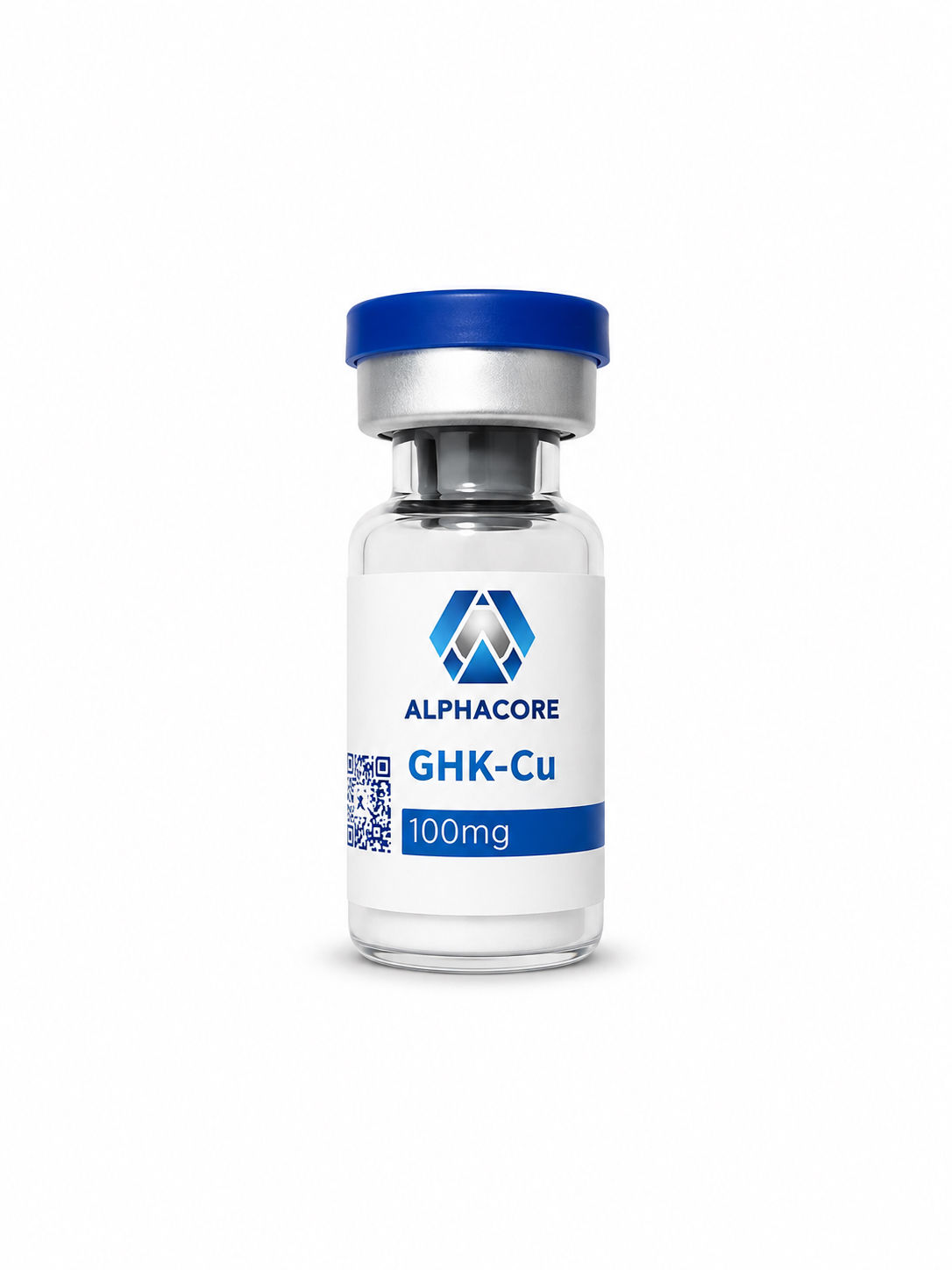

GHK-Cu (Copper Peptide) is a naturally occurring copper-binding tripeptide (glycyl-L-histidyl-L-lysine + copper).
It was first identified in human plasma by biochemist Loren Pickart in the 1970s and is best known for its roles in tissue repair, skin regeneration, and hair support.
Here’s what it does in the body:
⸻
1. Stimulates Tissue Repair & Regeneration
GHK-Cu activates genes involved in:
•Wound healing
•Collagen production
•Extracellular matrix remodeling
Effects:
•Faster skin healing
•Improved scar appearance
•Increased skin thickness and elasticity
⸻
2. Increases Collagen & Elastin
It stimulates fibroblasts to produce:
•Collagen
•Elastin
•Glycosaminoglycans
Results:
•Firmer skin
•Reduced fine lines
•Improved skin texture
This is why it’s common in anti-aging topicals.
⸻
3. Supports Hair Growth
GHK-Cu may:
•Increase blood flow to hair follicles
•Prolong the anagen (growth) phase
•Reduce follicle miniaturization
Often used in scalp serums for thinning hair.
⸻
4. Anti-Inflammatory & Antioxidant
It reduces pro-inflammatory cytokines and supports antioxidant enzymes.
Effects:
•Calms skin irritation
•Reduces redness
•Supports recovery after procedures
⸻
5. Antimicrobial Activity
Copper has mild antimicrobial properties.
May help:
•Acne-prone skin
•Minor infections
⸻
6. Potential Neuroprotective Effects (Experimental)
Some research suggests:
•Support for nerve repair
•Anti-inflammatory effects in neural tissue
Still largely preclinical.
⸻
7. Gene Modulation
One of its unique features:
GHK-Cu appears to upregulate regenerative genes and downregulate inflammatory genes, influencing thousands of gene pathways related to healing and aging.
How It’s Used
•Topical (most common) – skin & hair
•Subcutaneous injection – experimental regenerative use
•Microneedling adjunct – enhances collagen response
+)