


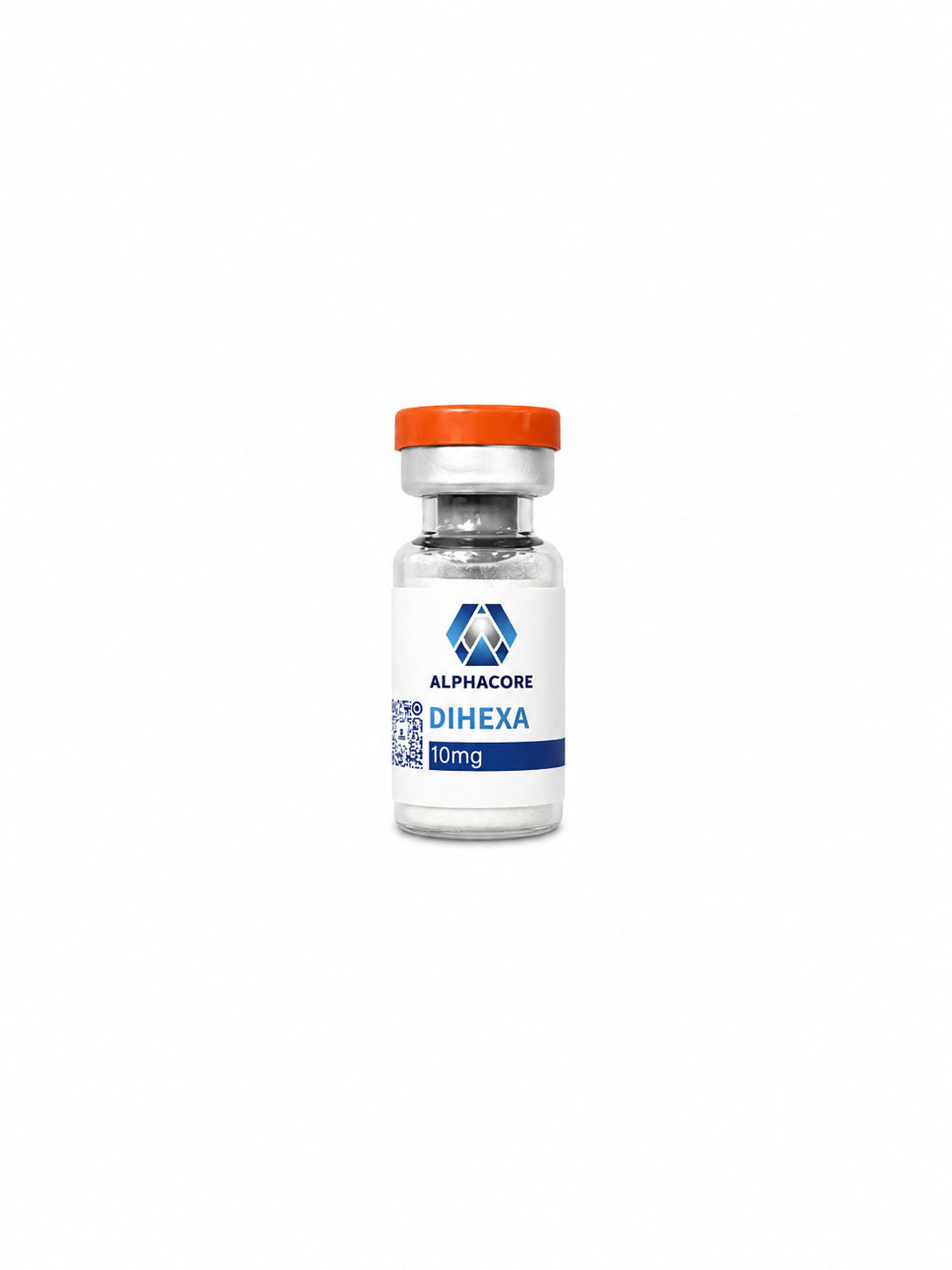

Dihexa (N-hexanoic-Tyr-Ile-(6) aminohexanoic amide) is an experimental nootropic peptide originally developed at Washington State University. It is not FDA-approved and is still considered a research compound.
Here’s what it appears to do in the body and brain based on preclinical research:
⸻
1. Strongly Increases BDNF Activity (Indirectly)
Dihexa binds to HGF (hepatocyte growth factor) and enhances signaling at the c-Met receptor, which promotes:
•Synapse formation (synaptogenesis)
•Neuron growth
•Neural repair
•Long-term potentiation (learning mechanism)
It may increase synaptic density significantly in animal models — more than many traditional nootropics.
⸻
2. May Improve Memory & Learning
In rodent studies, Dihexa:
•Reversed chemically induced memory impairment
•Improved maze performance
•Enhanced long-term memory retention
It has been explored as a potential treatment for:
•Alzheimer’s disease
•Cognitive decline
•Traumatic brain injury
But human trials are very limited.
⸻
3. Promotes Neuroplasticity
Because of its effect on growth factor signaling, it may:
•Increase dendritic spine formation
•Strengthen neural connections
•Improve brain repair after injury
This is why some refer to it as a “synaptogenic” compound.
⸻
4. Possible Mood & Motivation Effects
Users anecdotally report:
•Improved focus
•Increased mental clarity
•Better mood
•Enhanced verbal fluency
However, these reports are not well-studied in controlled human trials.
)